RelativityFebruary 27, 2025
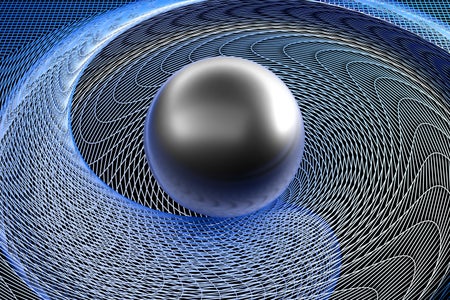
Einstein’s General Relativity with a Twist: Teleparallelism
A nearly century-old offshoot of Einstein’s general theory of relativity may hold promise for solving the mysteries of dark matter, dark energy and more
Paul M. Sutter is a visiting professor of physics and astronomy at Barnard College at Columbia University, as well as an author, NASA advisor, television host and U.S. cultural ambassador.
Einstein’s General Relativity with a Twist: Teleparallelism
A nearly century-old offshoot of Einstein’s general theory of relativity may hold promise for solving the mysteries of dark matter, dark energy and more
A Science Breakthrough Too Good to Be True? It Probably Isn’t
The more exciting, transformative and revolutionary a science result appears, especially if it comes out of nowhere, the more likely it is to be dead wrong. So approach science headlines with a healthy amount of skepticism and patience
The Strangest Alien Worlds Are beyond Astronomers’ Wildest Dreams
Alien worlds that glow like lightbulbs or harbor molten-rock rain are revealing planets’ profound cosmic diversity—and pointing the way toward finding those that truly resemble our own familiar Earth
It’s Time for a Nature Preserve—On the Moon
The far side of the moon holds the keys to the future of radio astronomy. We must maintain its pristine silence to benefit everyone

Could Gravitational-Wave ‘Memories’ Prove Einstein Wrong?
According to Albert Einstein’s general theory of relativity, the universe remembers every gravitational wave—and scientists could soon test these cosmic recollections
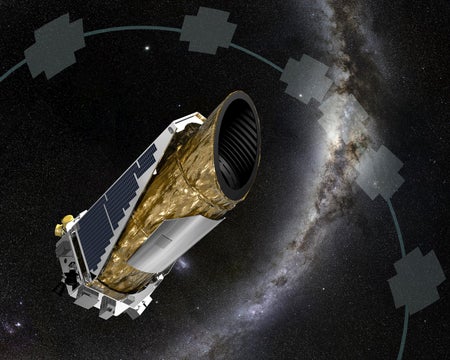
We Need Small Astronomy as Much as Big Astronomy
In an era of budget-busting mega-telescopes, we shouldn’t forget the importance of smaller telescopes, more focused missions and the unexpected surprises they reveal about the universe
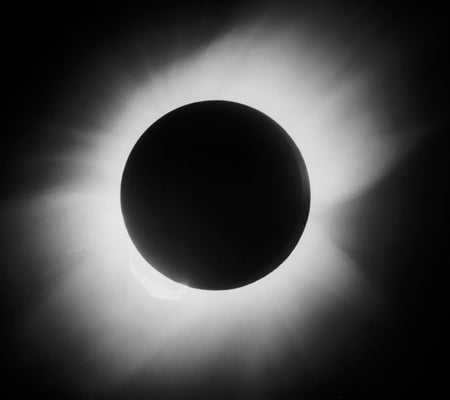
Three Times That Solar Eclipses Transformed Science
From the discovery of new elements to the testing of novel theories of gravity, total solar eclipses have helped spark scientific progress for centuries

The Loss of Dark Skies Is So Painful, Astronomers Coined a New Term for It
Astronomers have a new term to describe the pain associated with the loss of access to dark skies: noctalgia
Physicists Link Two Time Crystals in Seemingly Impossible Experiment
A new demonstration of these exotic constructs could help bridge classical and quantum physics
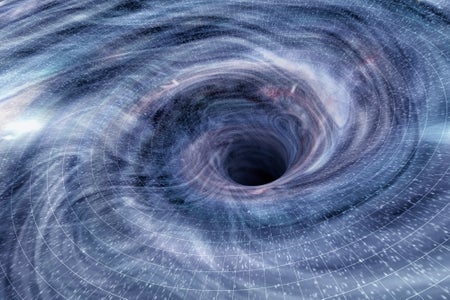
Are Wormholes a Dead End for Faster-Than-Light Travel?
Portals connecting far-distant regions of the universe may not be just the stuff of science fiction, but they probably couldn't be used for interstellar travel